Kamenny Island (Stony Island)
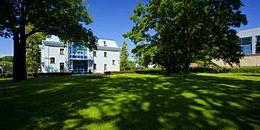
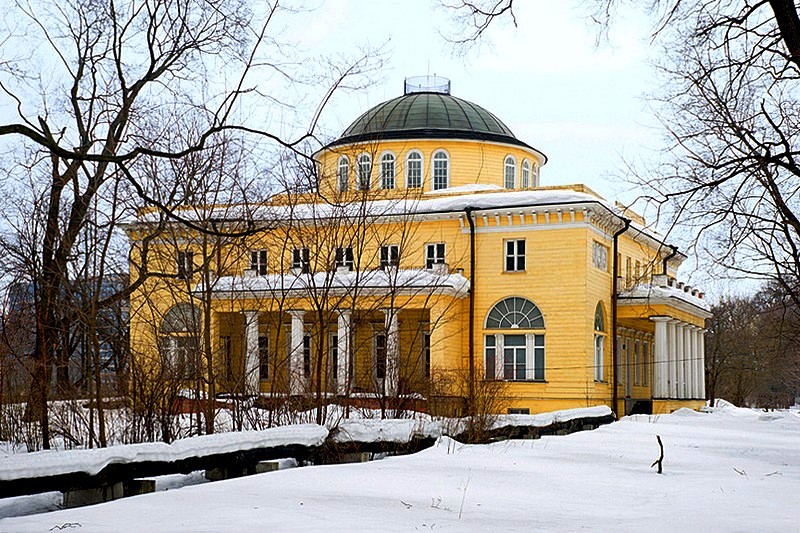
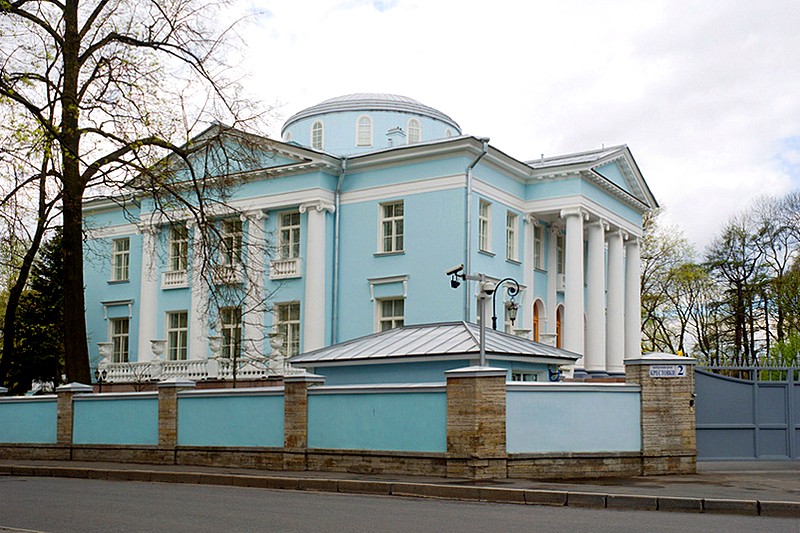
With a name that translates as Stone Island, Kamenny Island is one of the most picturesque corners of St. Petersburg, and one of the most rarely visited by tourists. As the playground of the city's elite for nearly three hundred years, it has amassed a number of stunning architectural treasures, the grandest of which is the Kamennoostrovskiy Palace, a royal residence built by Catherine the Great for her son, the future Paul I. The island is a delight to explore, with overgrown pathways that hide some truly beautiful, if rundown, buildings.
The island was originally granted by Peter the Great to Count Gavriil Golovkin, his Grand-Chancellor and his friend since childhood. When his family was disgraced in the Lopukhina Affair during the reign of Empress Elizabeth, Kamenny Island was passed to Count Alexei Bestuzhev-Ryumin, also Grand-Chancellor, who brought several thousand serfs from his Ukrainian estates to drain the marshy island and build its embankments. A decade later, however, Bestuzhev-Ryumin was also banished from court due to his Prussian connections, and Elizabeth passed the island to her son, the future Peter III.
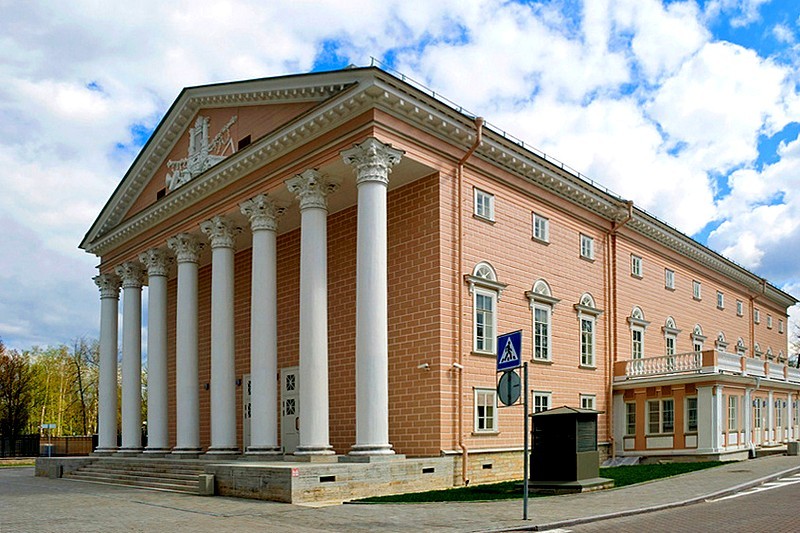
By the end of the 18th century, Kamenny Island had become a center of aristocratic and royal leisure pursuits. Several of Russia's greatest noble families built dachas there, and it became the site for numerous theatrical performances, including the premieres of two operas by the famous Neapolitan composer Giovanni Paisiello. This tradition was cemented four decades later with the building of the Kamennoostrovskiy Theatre, a large neoclassical building in wood by Smaragd Shustov. Erected in 40 days, the theatre was only designed to last for seven years, but is still standing today.
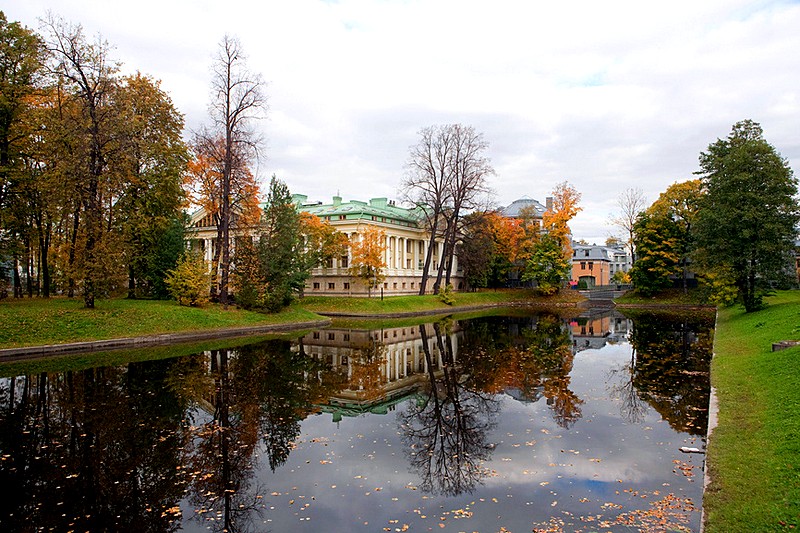
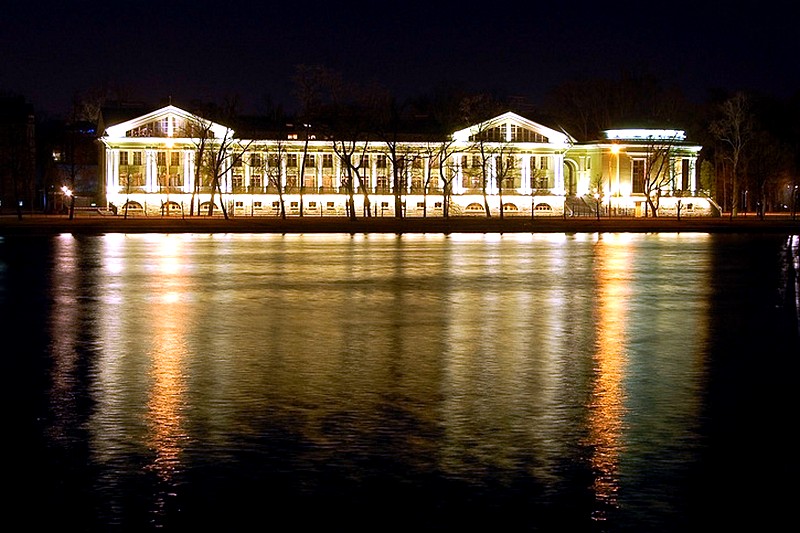
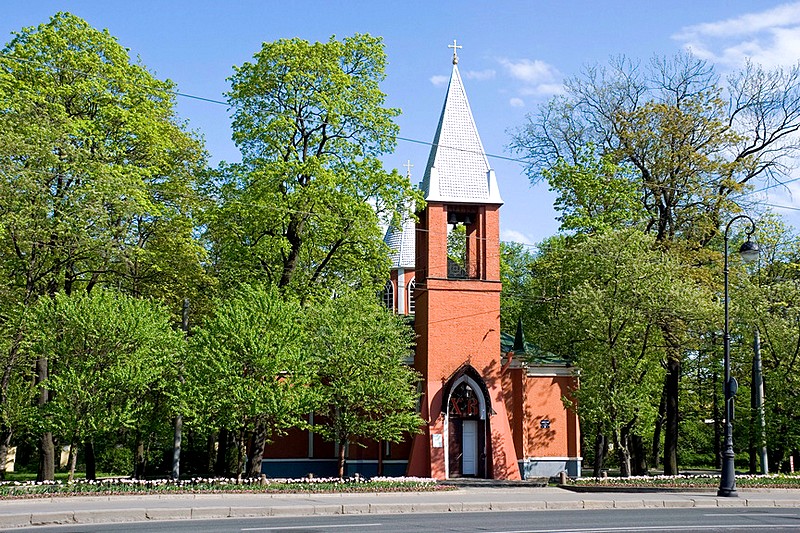
The Kamennoostrovsky Palace was begun in 1776 under the auspices of Yuriy Felten, and completed five years later, along with the neighbouring, gothic Church of St. John the Baptist. The surrounding park and its follies were designed by French-born architect Thomas de Thomon in the 1810s. While much of the original park has been preserved, there is officially no public access to the grounds or palace, which have long been used as a sanatorium by the Russian Air Force.
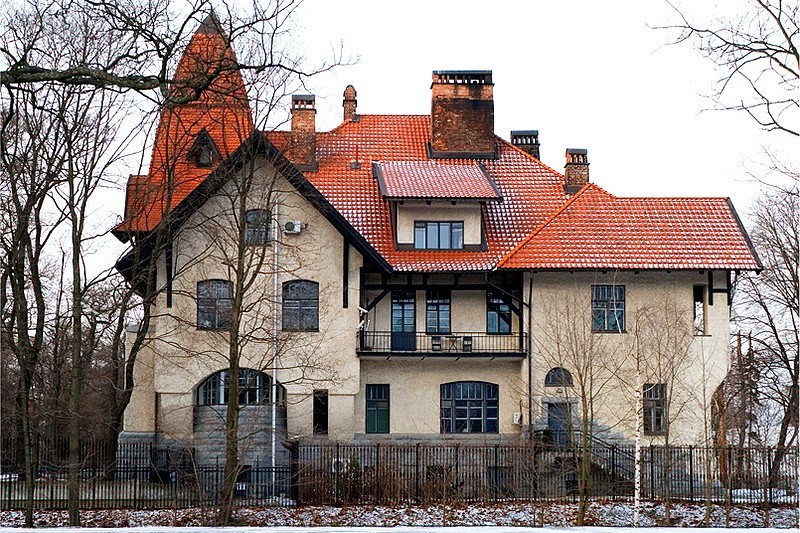
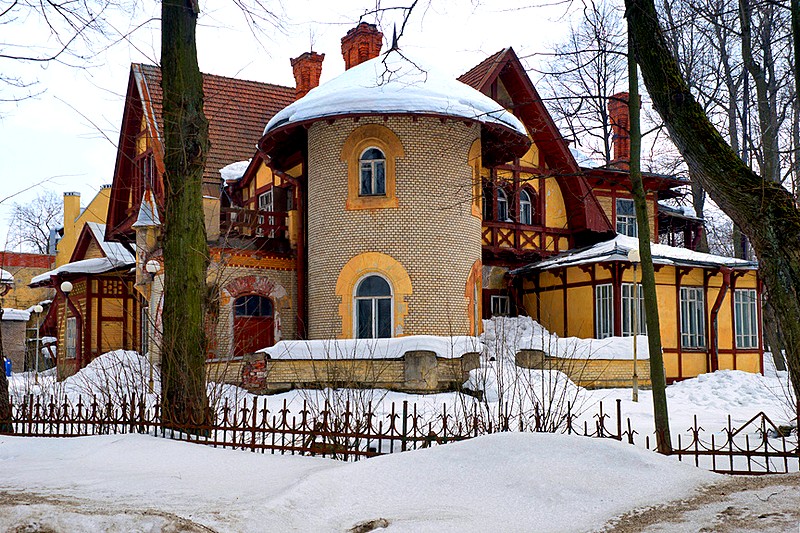
Other fine neoclassical buildings on the island are the Dolgorukov Mansion, built by Shustov in 1832 for Russia's oldest surviving noble family, and, from almost a century later, the Polovtsov Mansion, designed by the late neoclassicist Ivan Fomin for Alexander Polovtsov, Secretary of State. Other notable buildings from the same period are mostly Art Nouveau, including the Follenveider Mansion, now the Dutch consulate, the Kleinmichel Mansion by Ippolit Pretro, and the Hausvald Mansion, which regularly served as a "foreign house" in Soviet film and TV programmes.
In the Soviet Union, Kamenny Island continued to be restricted to the higher echelons of society, with top-ranking government and military officials granted dachas on the island. The situation has changed little today, with numerous attempts being made by construction companies to grab land for elite housing projects. For now, however, Kamenny Island remains a peaceful wilderness, and one of the nicest places in the city to stroll.