Quick Facts
St. Petersburg in Facts and Figures
 Location:
- Eastern Europe, the Eastern shore of the Baltic Sea (Gulf of Finland)
Latitude:
Longitude:
Time Zone:
Founded:
City's birthday:- celebrated each year on May 27
Population:
How does St. Petersburg compare?- The most Northern city in the world with a population over 1 million
Area:
Main river:- Neva. The city is located in the delta of the Neva River on numerous islands, a fact which prompted some observers to call it "The City on 101 Islands"
Timetable of bridge openings:
Main natural phenomena:
Origin of the name:- Named in honor of St. Peter and not Peter the Great, the founder of the city.
- The name can be translated as "The City of St. Peter". St. Petersburg, FL was named in honor of St. Petersburg, Russia by Russian-born railroad builder Piotr Dementyev (Peter Demens)
Name changes:
May, 1703 - August, 1914
St. PetersburgAugust, 1914 - February, 1924
PetrogradFebruary, 1924 - July, 1991
LeningradJuly, 1991 - Present
St. Petersburg
Nicknames:- "The Venice of the North"(referring to St. Petersburg's many rivers and canals)
- "The Palmyra of the North"
- "The Northern Capital of Russia" (referring to the centuries-old rivalry between St. Petersburg and Moscow)
Symbols:
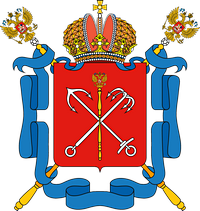
The Seal:- A sea anchor and a river anchor with a scepter - a symbol of royal power - on a red field.
Local government:- The Governor and the Governor's Office, The Legislative Assembly
Zoning:- 20 administrative districts, including satellite towns under St. Petersburg's jurisdiction
Main cultural attractions:
Airports:
Sea port:- Passenger terminal on Vasilievsky Island