St. Petersburg (Leningrad) under Stalin: Post-war recovery and reconstruction (1945-1953)
The siege had ended, the war was over, but Leningrad was shattered. Thousands of apartments, factories, schools, hospitals, power plants, roads - in short, the city's entire infrastructure - had been destroyed or damaged during almost three years of persistent air raids, shelling, and fires. Over a million civilians had died of starvation, cold, and disease; another million had been evacuated. A motley 600,000 weakened, emaciated people remained to rebuild the ravaged city.
Rebuilding included the arduous task of disposing of the bodies of the blockade's many victims. Almost uncountable, about half a million of them were buried in 186 mass graves at the Piskarevsky Memorial Cemetery, which during the war was just an enormous empty pit into which the bodies had been dumped. In the words of the Leningrad poet, Sergei Davydov: "Here lies half the city."
Repairs to the Hermitage, which had suffered considerable damage during the bombing attacks, started even before the war ended. Many of its numerous rooms contained nothing but empty gilt frames; shortly after the Nazi invasion, museum staff and volunteers had worked around the clock, packing two freight trains with over a million exhibits that were shipped to the town of Sverdlovsk in the Ural Mountains. Ironically, a good portion of these treasures were safely stored in the Ipatiev House, where in 1918 the last Romanov Tsar and his family had been murdered by the Bolsheviks. In October 1945, these invaluable objects were shipped back to Leningrad and by 4 November, sixty-nine halls in the Hermitage had been opened to the public.
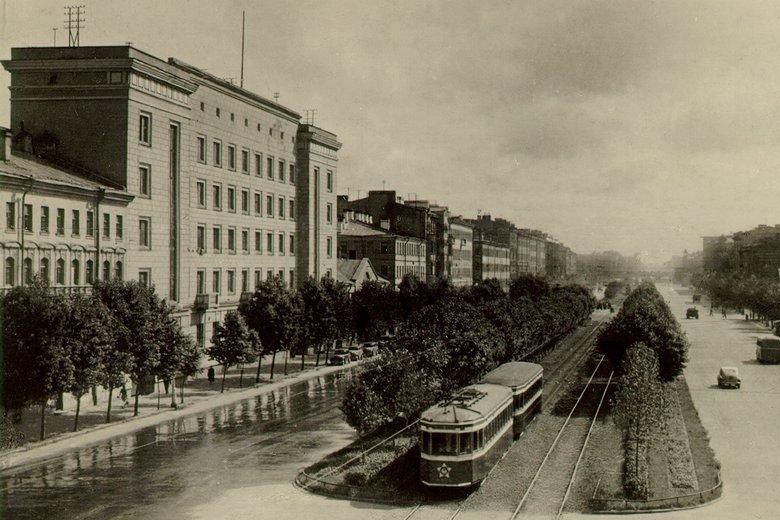
The Hermitage story is emblematic of the spirit of regeneration that gripped the city itself. Facades were renovated, streets repaved, and parks replanted. By 1950, Leningrad had been resurrected. But Stalin, smoking his pipe in Moscow, was not at ease. Leningrad had long been suspect to him. He feared the threat posed by city's status as cradle of the Revolution and former imperial capital with its enormous cultural, scientific, and economic significance. The siege had only increased this nagging suspicion: for almost 900 days, the city leaders, cut off in blockaded Leningrad, had acted autonomously and defended the city with irreproachable courage. In unendurable conditions, they had not succumbed or surrendered – and all this without assistance from Moscow.
In order to keep the potentially dangerous city in check and remove any threat that might be posed by Leningrad's younger, popular leaders, Stalin endorsed the so-called "Leningrad Affair". In February 1949, the Politburo brought fabricated charges of treason against top Leningrad leaders, accusing them of attempting to establish a rival party organization. Found guilty in September 1950, six of the nine defendants were sentenced to death and immediately shot. Subsequent trials followed, in which more than two hundred Lenigraders were convicted on trumped-up political charges. By 1952, over two thousand municipal officials had been fired. Especially targeted were those state and Party officials who had played a significant role in defending the city.
The fate of the Museum of the Defense of Leningrad is symbolic. This museum, which had opened 27 January 1946 on the second anniversary of the lifting of the blockade, was declared "distorted" and "anti-Party". Upon visiting the museum in February 1949, Stalin's henchman Georgy Malenkov raged that it "created the myth of Leningrad's special 'blockade' fate. It has minimized the role of the great Stalin!" Clearly, such an outrage could not be tolerated. In August 1949, the museum was closed and its first director, Lev Rakov, convicted of ideological heresy and of neglecting the supposedly significant part played during the blockade by Stalin and the Communist Party. For this oversight, Rakov was sentenced to twenty-five years (happily, under Khrushchev's Thaw, he was exonerated and released). Although it had been the city's most popular museum after the Hermitage, it was liquidated in 1953 along with its collection of 32,000 objects following an unsuccessful attempt to rework the exhibits to better reflect Stalin's greatness.
Thus, Leningrad's independent power base had been effectually decapitated. Thereafter, the city's official status was only somewhat better than that of any other provincial town.